Sacred Space: Minimalism as a Spiritual Discipline
In the modern rush to acquire, we have forgotten that our homes are meant to be more than just storage containers for our belongings. They are meant to be sanctuaries, physical extensions of our inner state. At Lean Abundance, we believe that the act of clearing a shelf is often the first step in clearing the soul.
When we speak of “Sacred Space,” we aren’t referring to ornate altars or religious artifacts. We are referring to the deliberate creation of a “Quiet Mind” through the stewardship of our “External World.”
The Heavy Weight of the Unnecessary
For many of us, our homes have become “clutter magnets” that drain our cognitive energy. Research from UCLA’s Center on Everyday Lives of Families (CELF) discovered a direct correlation between high “object density” in a home and elevated levels of cortisol, the stress hormone, in mothers. Our brains are hardwired to scan our environment for tasks; every piece of clutter is a visual reminder of something that needs to be cleaned, moved, or managed.
As Fumio Sasaki, author of Goodbye, Things, reflects: “Minimalism is a tool that lets us see what’s actually important in our lives. It’s about more than just getting rid of things. It’s about gaining the freedom to focus on the things that truly matter.”
When we strip away the excess, we aren’t just tidying up; we are performing a spiritual surgery. We are removing the layers of “temporary” distractions to reveal the “eternal” peace underneath.
“The happiness of your life depends upon the quality of your thoughts.” — Marcus Aurelius
If our thoughts are influenced by our environment, then a chaotic home inevitably leads to a chaotic mind.
The Mental Sanctuary: Silence as a Resource
Minimalism is the physical practice of Stoic detachment. The Stoics taught us to hold our possessions loosely, recognizing that they can be taken from us at any moment. By intentionally choosing to live with less, we build a “Mental Sanctuary” that remains undisturbed by external losses.
In his work on Digital Minimalism, Cal Newport discusses the importance of “Solitude Deprivation”, the state where we provide our brains with zero time alone with our own thoughts because we are constantly tethered to devices and distractions.
Minimalism in our physical space creates the “white space” necessary for the soul to breathe. It allows us to transition from a life of constant reaction to one of deep reflection.
Minimalism as Stewardship
Within our pillar of The Liberated Life, minimalism is viewed as a form of stewardship. We are the temporary guardians of our resources. When we over-consume, we aren’t just filling our closets; we are depleting our focus.
To practice “Sacred Space” as a discipline, consider these three shifts:
The Theology of Enough: Stop asking “What else do I want?” and start asking “What is essential for my purpose?”
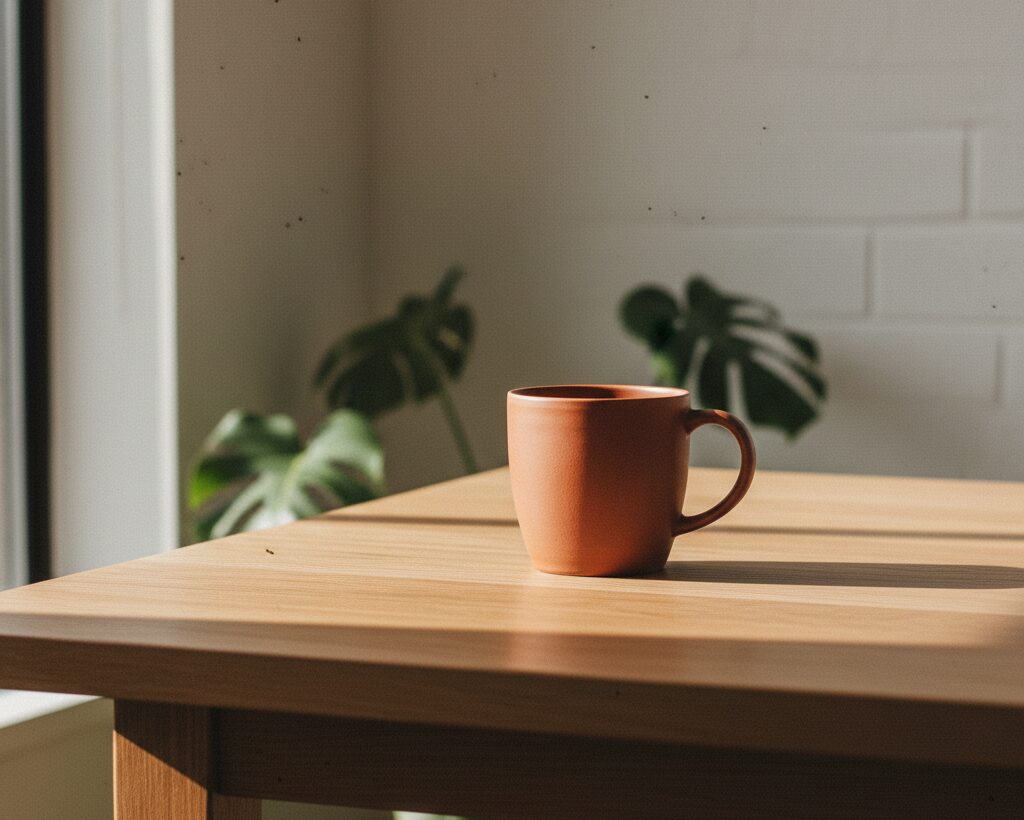
Visual Quiet: Aim for surfaces that are clear. A clear table isn’t “empty”—it is full of potential. It is a place where a book can be read, a prayer can be spoken, or a conversation can happen without the friction of clutter.
The One-In, Two-Out Rule: Treat your home as a sacred vessel with a fixed capacity. If something new enters, something old must be blessed and passed on to someone who truly needs it.
Uncovering the Eternal
The “Modern Sage” understands that abundance is not found in the word count of our possessions, but in the density of our presence. When we stop managing “stuff,” we start managing our souls.
By refining our environment, we create a space where the “unhurried life” can actually take root. We find that in the stillness of a simplified room, we can finally hear the whispers of wisdom that were previously drowned out by the noise of our things.